



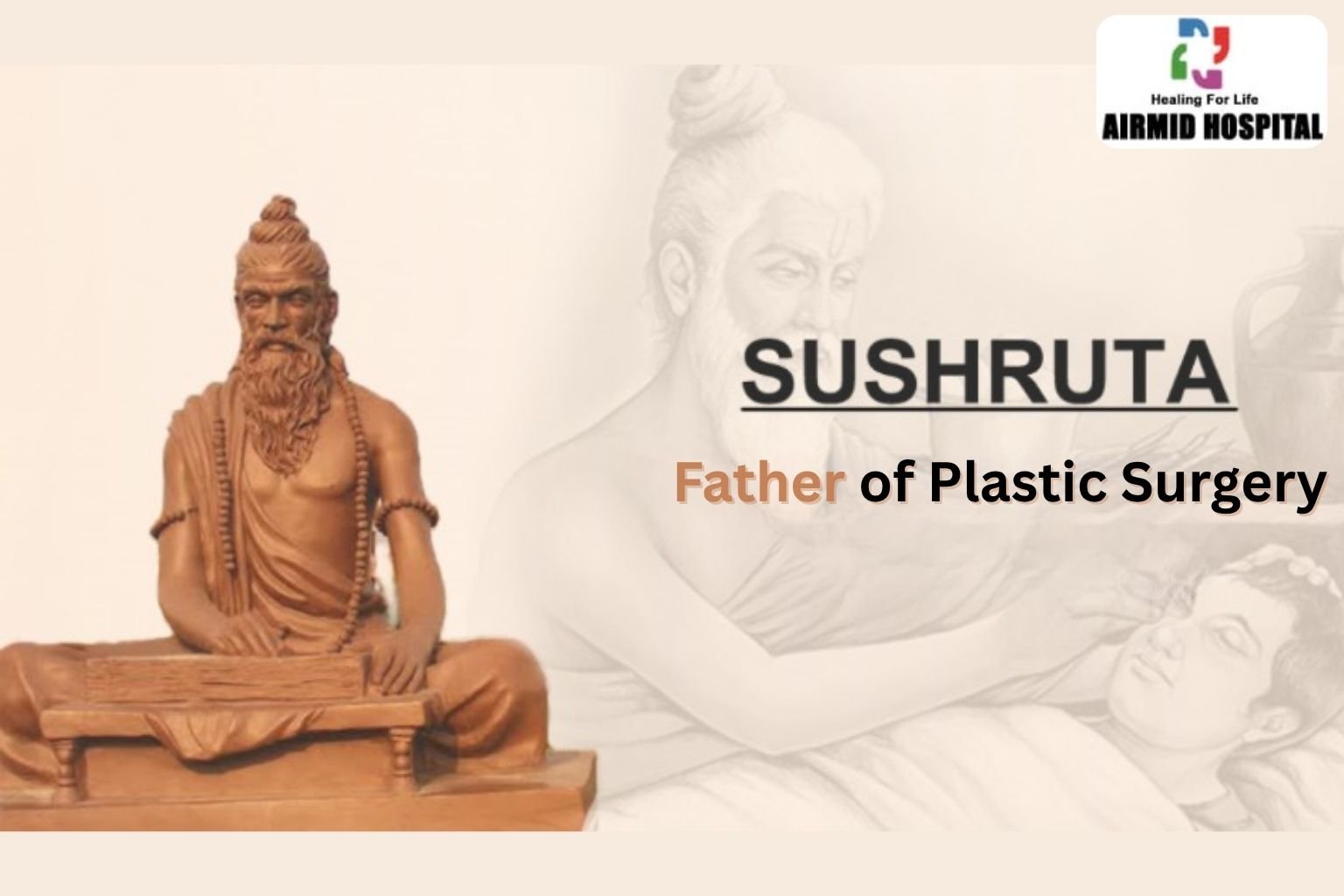
Plastic surgery often gets linked with modern clinics, advanced machines, and cosmetic makeovers. But its story didn’t begin in a high-tech operating room. It started thousands of years ago in ancient India. If you’ve ever wondered who is the father of plastic surgery, the answer takes us back to a skilled surgeon named Sushruta.
Even today, whether someone visits a plastic surgery specialist in Rithala or checks treatment options at Airmid Hospital, the basic principles behind many procedures still connect to what Sushruta introduced centuries ago.
Who Is the Father of Plastic Surgery?
Sushruta is known as the father of plastic surgery. He lived around the 6th century BCE and practiced in Varanasi.
When people ask who was the father of plastic surgery, they’re usually surprised that the answer isn’t from modern Europe or America, but from ancient India. What makes Sushruta stand out is not just that he performed surgeries, but how systematically he approached them.
He treated surgery as a discipline that required training, observation, and precision. That mindset feels very familiar even today.
A Look at the History of Reconstructive Surgery
The history of reconstructive surgery has practical roots. In ancient India, injuries to the face were common due to wars and punishments. Losing a nose, for example, was not only physically damaging but socially isolating.
Sushruta developed methods to rebuild damaged body parts, especially the nose. This made him an ancient plastic surgery pioneer who addressed real-life problems, not just theoretical ideas.
His work shows that plastic surgery didn’t begin as a luxury, it started as a necessity.
Sushruta’s Contributions to Medicine
The Sushruta Samhita
Sushruta recorded his knowledge in the Sushruta Samhita, a detailed medical text. The Sushruta Samhita significance lies in how clearly it explains surgical practices.
It includes:
- Step-by-step surgical procedures
- Descriptions of tools
- Basic understanding of human anatomy
- Guidelines for training students
This wasn’t casual writing. It reads more like a structured manual, which explains why it remained relevant for centuries.
Early Advancements in Cosmetic Surgery
Sushruta made major contributions to the early advancements in cosmetic surgery. One of his most well-known techniques involved reconstructing the nose using skin from the forehead.
This method, in modified form, is still used today.
He also worked on:
- Repairing ears
- Treating wounds
- Skin grafting
These developments highlight the origin of surgical techniques in India and show how far ahead of his time he was.
Training and Discipline
Sushruta believed that surgery required practice. He advised students to train on fruits, vegetables, and animal tissues before operating on humans.
He also stressed cleanliness and careful handling of instruments. While he didn’t have access to modern sterilization, his focus on hygiene shows a clear understanding of safety.
Why Sushruta Holds This Title
Many ancient cultures had medical practices, but Sushruta’s work stands out for a few simple reasons:
- He focused on practical solutions
- He documented his methods clearly
- His techniques influenced future generations
That’s why he is still called the father of plastic surgery.
How His Work Connects to Modern Medicine
Modern plastic surgery looks very different on the surface, but the fundamentals haven’t changed much.
Procedures like skin grafting and reconstruction still follow the same basic logic: restore form and function.
So when someone consults a plastic surgery specialist in Rithala, they’re benefiting from knowledge that has been refined over centuries, starting with Sushruta.
Hospitals such as Airmid Hospital combine modern tools with these long-standing principles. In cases involving injuries, patients may also need support from an orthopedic surgeon in Rithala or care at the best orthopedic hospital in Rithala. Medicine today works as a connected system rather than isolated specialties.
10 Lines About Sushruta
Here are 10 lines about Sushruta for a quick overview:
- Sushruta was an ancient Indian surgeon.
- He lived around the 6th century BCE.
- He is known as the father of plastic surgery.
- He wrote the Sushruta Samhita.
- He described hundreds of surgical procedures.
- He used specialized surgical instruments.
- He developed reconstructive techniques.
- He trained students in a structured way.
- His work influenced global medicine.
- His legacy continues in modern healthcare.
The Thinking Behind His Work
What stands out about Sushruta is his approach. He observed, tested, and improved. He didn’t rely on assumptions.
For example, before performing surgery, he studied anatomy carefully. He practiced techniques repeatedly. That kind of methodical thinking forms the backbone of modern medicine as well.
A Simple Comparison
If Sushruta walked into a modern operating room, the equipment would surprise him. But the purpose wouldn’t.
Surgeons still aim to repair, restore, and improve quality of life. The tools changed, but the goal stayed the same.
The Legacy He Left Behind
Sushruta’s work didn’t remain limited to India. Over time, his knowledge spread to other regions through translations and scholarly exchanges.
His influence helped shape:
- Reconstructive surgery
- Surgical education
- Medical documentation
Few individuals have had such a long-lasting impact on healthcare.
Why This Topic Still Matters
Understanding who was the father of plastic surgery helps put modern medicine into perspective. It shows that innovation builds over time.
Whether someone is visiting a plastic surgery specialist in Rithala or seeking care at the best orthopedic hospital in Rithala, they’re part of a long medical journey that began with early pioneers like Sushruta.
Why the Father of Plastic Surgery Still Matters Today
So, who is the father of plastic surgery? The answer remains the same, Sushruta.
His contributions to reconstructive surgery, his detailed writings, and his practical approach to medicine continue to influence healthcare today.
From ancient techniques to modern hospitals like Airmid Hospital, his legacy still plays a role in how medicine works. That’s what makes his story worth remembering.