



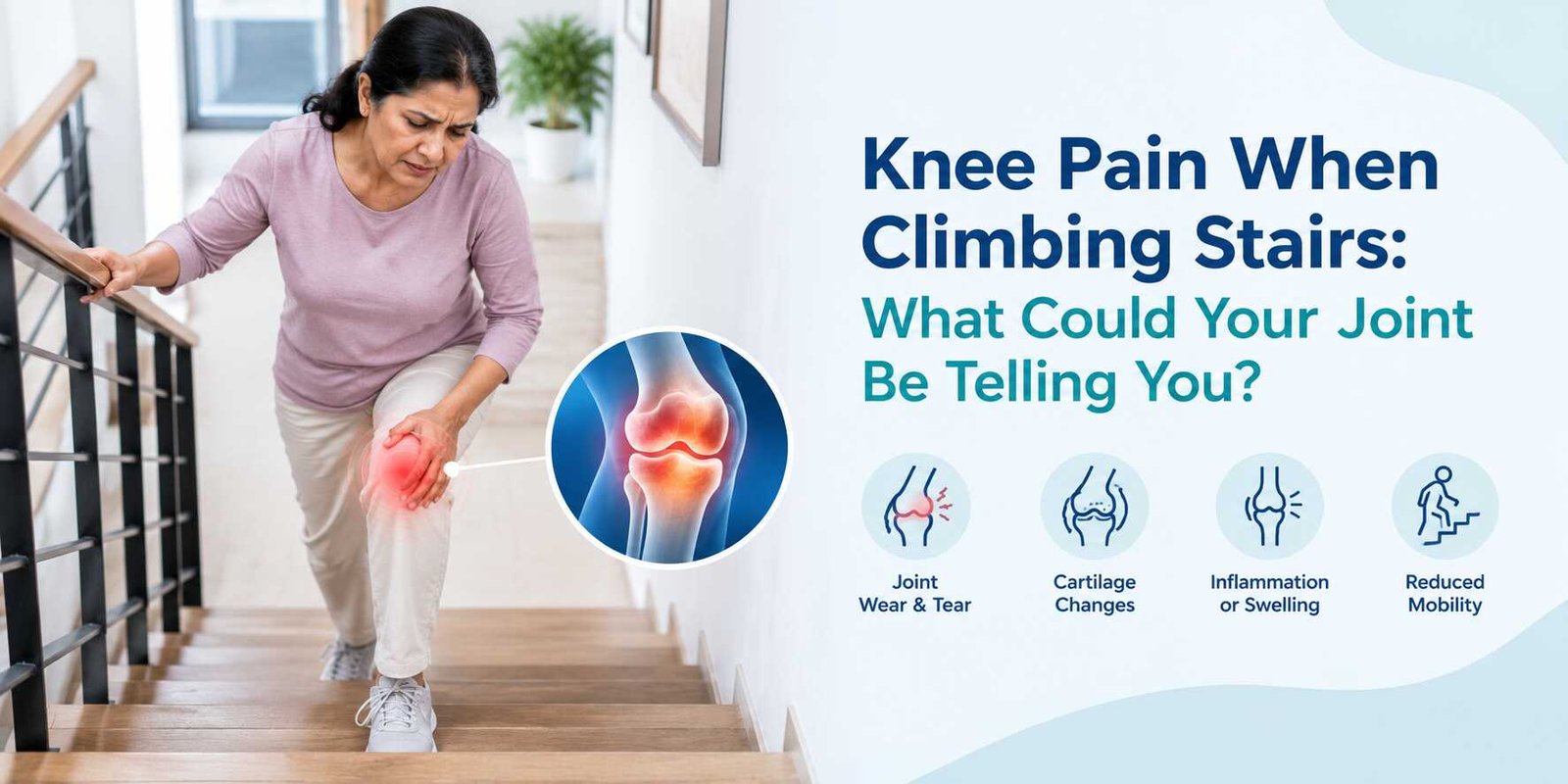
Does your knee feel pain while climbing stairs? Knee pain when climbing stairs may make simple day-to-day activities troublesome for you, whether you are going to your office or even when you go upstairs in your house. At Airmid Hospital, we understand the importance of knowing about your symptoms. If you are looking for the Best orthopedic hospital in Rohini, then learning about causes may help you make an informed decision.
What Does Knee Pain When Climbing Stairs Mean?
The knee joint supports your body weight, as well as bending, extending, walking, and stair climbing. There are specific requirements imposed by the process of stair climbing on the muscles and joints of the kneecap. Constant knee pain when climbing stairs indicates a serious condition that should be paid special attention to.
The patellofemoral joint is the joint that connects your kneecap and thighbone. The pain arises from irritation or excess stress to the joint.
The location, intensity, and persistence of the pain will aid in identifying the probable cause of the pain, but it is important not to just make a diagnosis based on the symptoms.
Common Causes of Knee Pain When Going Upstairs
1. Patellofemoral Pain Syndrome (PFPS)
Pain that occurs in the kneecap area is an indication of patellofemoral pain syndrome. The condition can be experienced by people who engage in physical exercise or are athletes.
This may happen when performing squats, running, going up and down the stairs and sitting for a long time while keeping the knees bent. Weakness in the quadriceps muscles can also cause issues with patella function.
2. Knee Osteoarthritis
Osteoarthritis (OA) is a condition that involves the tissues inside the joint, leading to pain, stiffness, and limited mobility. Symptoms of knee osteoarthritis include pain while walking, difficulty climbing stairs, and swelling and stiffness following periods of inactivity.
The articular cartilage ensures that there is a smooth surface on the end of the bones. In osteoarthritis, there could be damages to the articular cartilage, and even to the joint structures. There are various individual factors, such as age.
If you want to find out more about early warning signs, please check out our related blog: Early Signs of Knee Osteoarthritis: Symptoms You Should Not Ignore.
3. Meniscus or Ligament Injuries
The meniscus serves as a means to help spread out the load and reduce the force in your knee joint. An injury here results in pain, swelling, and catching of the joint.
Anterior Cruciate Ligament (ACL) injury affects your knee joint, especially when you suddenly twist your body. These injuries may occur while performing your daily activities, and not necessarily during sports.
4. Muscle Weakness and Overuse
Rapid increases in your exercise regime or continuous involvement in exercises that involve the bending of your knees can lead to an inflammation of your joint and the tissues around it.
Your kneecap will also have abnormal movements if you lack adequate muscle strength and coordination of your quads and hip muscles.
Knee Pain When Going Downstairs: Why Does It Feel Different?
There are individuals who feel more discomfort when going downstairs than up them. While descending, the muscles of the thighs have to help lower the body due to gravity.
This action places increased strain on the knee joints. Conditions like patellofemoral pain syndrome, osteoarthritis and others can be felt during this activity.
Knee pain when going downstairs may help you gather information, but it is not diagnostic for any particular illness. Kneecap pain, swelling, past injuries, and knee bending problems all need to be considered.
How Can You Manage Knee Pain Safely?
If your symptoms are mild, consider these practical steps:
- Modify activities: Temporarily reduce movements that consistently trigger pain.
- Apply a cold pack: Wrap it in a towel and apply it for up to 20 minutes at a time.
- Choose suitable exercise: Low-impact activities may help you stay active without aggravating symptoms.
- Build strength gradually: A physiotherapist can recommend exercises for your quadriceps and surrounding muscles.
- Avoid self-diagnosis: Do not assume that every painful knee has cartilage damage or requires surgery.
At Airmid Hospital, an appropriate assessment can help identify the cause and guide treatment. A physical examination may assess tenderness, swelling, strength, stability and range of motion (ROM). Your clinician may recommend imaging when your history and examination indicate a need.
If you want to understand how doctors assess advanced knee problems, explore our related article, Beyond X-Rays: What Factors Help Doctors Decide Whether Joint Replacement Is Necessary?.
When Should You See a Doctor for Knee Pain?
Schedule a medical examination if your discomfort continues, recurs, interferes with your sleep, or prevents you from functioning normally. A timely medical examination may assist in determining the problem before it becomes a guessing game for you.
See a doctor immediately if the knee is unable to bear weight, becomes significantly swollen or altered in appearance, or locks or gives out. A knee that is warm, red, and is associated with fever needs immediate evaluation.
The expert joint replacement specialist in Rohini may consider diagnosing joint issues when necessary, but the existence of knee problems doesn’t always imply that you will have to undergo surgical procedures. Many patients can do fine without them and use alternative treatments.
Take the Next Step Towards Healthier Knees
Knee pain when climbing stairs should not be ignored when it starts affecting your daily routine. Knowing the root cause will assist you in getting an appropriate treatment rather than suffering in silence.
At Airmid Hospital, we recommend that our patients get proper medical consultation if they suffer from knee pain. This will aid in identifying the cause of the problem and treating it properly.
Visit our Google Business Profile for hospital details, directions and contact information.
Contact Airmid Hospital today to arrange an orthopedic consultation and take an informed step towards better knee health.
Frequently Asked Questions
1. Why does knee pain when climbing stairs occur?
Common causes include patellofemoral pain syndrome, osteoarthritis and muscle weakness.
2. Can knee pain while bending indicate cartilage damage?
Yes, but muscle, tendon or meniscus problems can also cause pain.
3. Is walking good for painful knees?
Gentle walking may help maintain mobility if it does not worsen your symptoms.
4. Does knee pain always mean osteoarthritis?
No. Injuries, overuse and muscle weakness can also cause knee pain.
5. When should I see an orthopedic specialist?
Seek an assessment if pain persists, worsens or interferes with daily activities.