


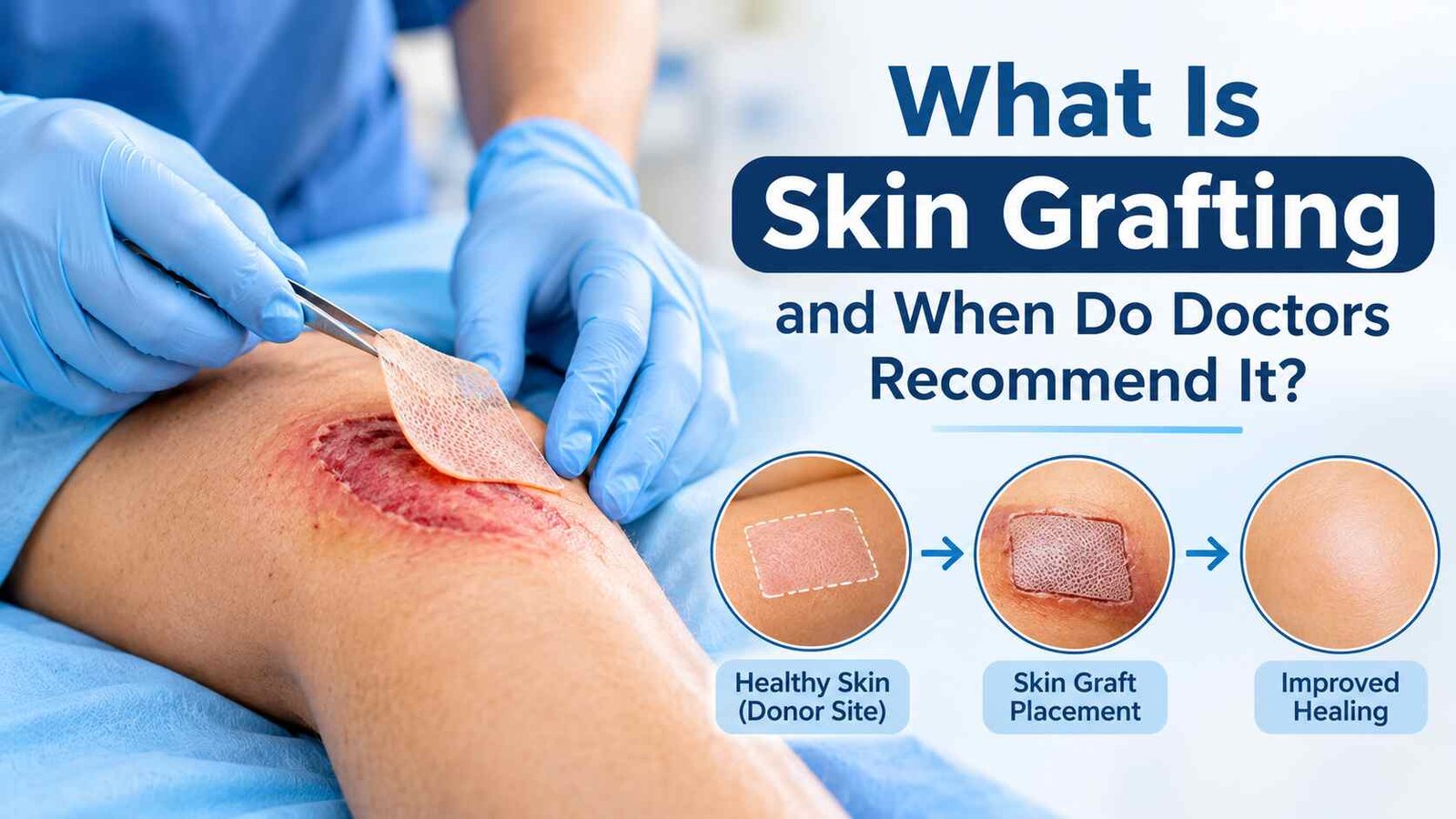
Have you ever thought about how physicians go about treating an injury when the patient has been burned over a large surface of the skin? Skin graft surgery involves taking healthy skin from one part of the body and putting it on the injured place to aid the process of recovery. Skin graft surgery may be recommended by physicians following serious burns, accident, infections, or surgeries resulting in the loss of a lot of skin.
At Airmid Hospital, the patients have the chance to obtain advice regarding the treatment from professionals. A consultation with a plastic surgery specialist in Rohini can help determine whether this procedure is suitable.
What Is a Skin Graft?
Skin graft can be defined as a skin tissue which is taken from an individual part of the body known as donor site and is placed in an injured part of the body to cover the injury which is known as recipient site.
A skin graft contains epidermis layer along with partial or full dermis layers. A graft requires developing a new network of blood supply for survival. Unlike a flap of skin, a graft does not have blood supply when it is transplanted into a new location.
When Do Doctors Recommend Skin Graft Surgery?
Doctors may recommend skin graft surgery when a wound cannot heal properly on its own or when the damaged area is too large to close naturally. Common situations include:
- Severe burns: Deep burns can destroy several layers of skin and may require surgical coverage.
- Traumatic injuries: Accidents can cause significant skin loss and expose underlying tissues.
- Non-healing wounds: Selected chronic wounds, including some diabetic ulcers, may need additional treatment.
- Infection-related skin loss: Removing infected or damaged tissue can leave an area that needs reconstruction.
- After tumour removal: Surgery to remove certain skin tumours may leave a wound that requires coverage.
The doctor first checks whether the wound is clean, has a suitable blood supply, and is ready for graft placement. Not every wound requires grafting.
What Are the Different Types of Skin Grafts?
The type of graft depends on the wound, its location, and the amount of skin needed.
Split-thickness skin graft
This includes the epidermis and a portion of the dermis. It is commonly used to cover larger wounds, including some burn injuries. The donor area can usually heal as new skin develops.
Full-thickness skin graft
This contains the epidermis and the entire dermis. It is often used for smaller wounds where appearance and skin thickness are important, such as certain areas of the face.
Composite graft
A composite graft contains skin along with other tissue, such as cartilage. Doctors may use it for selected reconstructive needs.
An autograft uses the patient’s own skin. Allografts and xenografts use tissue from other sources and may be used in particular situations, often as temporary wound coverage.
How Is the Skin Graft Procedure Performed?
The skin graft surgery process usually involves these steps:
- Wound preparation: The doctor cleans the recipient area and removes unhealthy tissue if necessary.
- Skin collection: Healthy skin is taken from a suitable donor site.
- Graft placement: The graft is positioned over the wound and secured with stitches, staples, or dressings.
- Dressing and protection: The area is covered to keep the graft stable while it begins to attach.
Over the following days, blood vessels from the recipient area start supporting the graft. The team at Airmid Hospital can guide patients on wound care and the precautions needed after the procedure.
How Long Is Skin Graft Recovery Time?
Skin graft recovery time varies according to the graft type, wound size, location, and general health. The graft may begin attaching within a few days, but complete healing can take several weeks or longer.
After skin graft surgery, patients may be advised to:
- Keep dressings clean and dry as instructed.
- Avoid pressure or stretching around the graft.
- Attend follow-up appointments.
- Report increasing pain, redness, swelling, discharge, or fever.
The donor site also needs time to heal. Patients looking for the best hospital in Rohini should consider the availability of appropriate surgical assessment, wound care, and follow-up support. At Airmid Hospital, recovery advice is based on the patient’s condition and healing progress.
What Are the Possible Risks of Skin Grafting?
Like any other procedures, there are certain risks associated with skin grafting surgery. Among them are infections, hemorrhaging, swelling underneath the graft, non-healing of the wound, scarring, and loss of sensation in the affected area.
At times, the graft fails to get sufficient blood circulation and cannot be successfully transplanted. Graft failure is a situation where the skin graft does not take to its new position on the wound site. Graft rejection is more common in case of donated tissue from another individual, rather than the patient’s skin.
It is necessary to consult your physician about additional treatment in case of certain complications. A doctor may recommend further wound care or another procedure if the graft does not heal as expected.
Conclusion: When Should You Consider Skin Grafting?
Skin grafting is useful in covering up wounds that are not healing properly on their own. Skin graft surgery is often advised for people who suffer from burns, injuries, or selected cases of unhealed wounds.
Airmid Hospital encourages patients to seek medical advice for wounds that are large, deep, or slow to heal. Visit our Google Business Profile to learn more, or Contact us to arrange a consultation.
Frequently Asked Questions
Is skin graft surgery painful?
The procedure is performed under anaesthesia. Some discomfort may occur at the donor and recipient sites during recovery.
How long does a skin graft take to heal?
Initial attachment may take a few days, while complete healing can take several weeks or longer.
Does skin grafting leave a permanent scar?
Scarring can occur at both sites, and its appearance varies depending on the wound, graft type, and healing.
Can a skin graft fail to attach?
Yes. Infection, poor blood supply, or fluid collecting beneath the graft can prevent successful attachment.
Can skin grafting be used for burn injuries?
Yes. Doctors may use grafting to cover deep burns where damaged skin cannot heal adequately on its own.
One thought on “What Is Skin Grafting and When Do Doctors Recommend It?”