


Have you ever wondered how physicians go about fixing a part of the body which is affected because of an injury, burns, a congenital abnormality, or even surgery? Reconstructive surgery aims to reconstruct the injured tissue and improve its appearance or functionality. Reconstructive surgery is considered for those who have been damaged or have had their tissues removed due to some reason.
At Airmid Hospital, patients can seek guidance about suitable treatment options. Consulting a plastic surgery specialist in Rohini can help you understand whether reconstruction may be appropriate for your needs.
What Is Reconstructive Surgery?
It refers to a surgical procedure where tissues in the body which have been injured, diseased, or existent at birth are reconstructed. In addition to aesthetics, reconstruction procedures also improve mobility, shield internal structures, and help in functioning.
The treatment may be required for burn patients who require coverage of the skin or a patient with facial injury who requires tissue repair. Reconstruction is performed based on the location of injury, availability of healthy tissue, and the general health of the patient.
When Is Reconstructive Surgery Needed?
Doctors may recommend reconstructive surgery when damage or tissue loss affects a person’s appearance, comfort, or ability to perform everyday activities. Common reasons include:
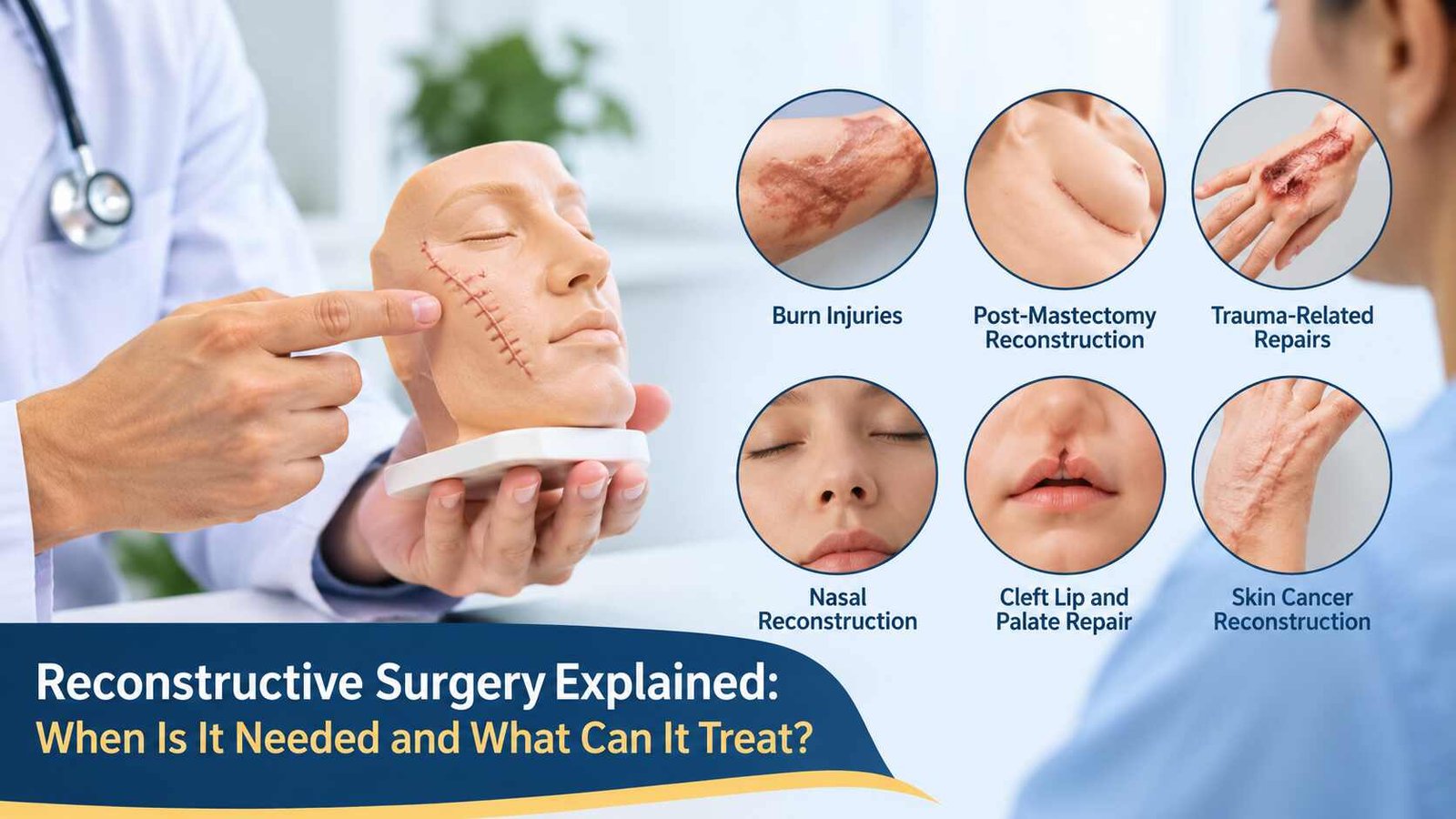
- Severe burns: Deep burns can damage several layers of skin and may require grafts or tissue flaps.
- Accidents and injuries: Traumatic injuries can damage the skin, muscles, nerves, or bones.
- Birth defects: Some congenital conditions affect the development or structure of body parts.
- Tumour removal: Removing a tumour may leave an area that needs tissue reconstruction.
- Non-healing wounds: Selected wounds may need surgical coverage when normal healing is difficult.
- Scarring and contractures: Tight scar tissue can restrict movement, particularly around joints or the face.
The doctor assesses the affected area and considers whether surgery is likely to improve function, provide wound coverage, or address other concerns.
What Conditions Can It Treat?
The requirement of undergoing treatment depends on the patient’s needs. For some people, reconstructive therapy can be required following accidents, whereas for others it can be needed after the cancer treatment or surgery.
Reconstructive therapy may be helpful when there are facial wounds, damaged hands, loss of skin, scarring from burns, breast alteration due to cancer treatment, and some birth deformities. The goal is to repair the affected area while preserving as much healthy tissue and function as possible.
What Are the Different Types of Reconstructive Surgery Procedures?
There are several approaches, and the choice depends on the size, location, and type of damage.
- Skin grafting: Healthy skin is taken from one part of the body and placed over an area where skin is missing. It may be used for burns and selected wounds.
- Skin flap surgery: Skin and underlying tissue are moved from one area to another, sometimes with their blood supply kept connected.
- Breast reconstruction: This may help rebuild the breast after removal due to cancer or another medical reason.
- Facial and hand reconstruction: These procedures may repair damaged tissues and help improve movement or other functions.
- Scar revision: Surgery may improve the appearance or movement problems caused by certain scars.
Airmid Hospital patients can discuss the available options and the expected benefits and limitations with their treating specialist.
Read Also: What Is Skin Grafting and When Do Doctors Recommend It?
How Is Reconstructive Surgery Different from Cosmetic Surgery?
Both involve changes to body structures, but their main purposes are different.
Reconstruction procedures are mostly carried out for the purpose of repairing some damages, addressing a certain disease or improving functioning. Cosmetic surgery is normally done in order to alter one’s appearance where reconstruction is not medically necessary.
For instance, repairing skin after a serious burn is reconstructive treatment, while changing the shape of an otherwise healthy nose for appearance is generally cosmetic. Some procedures may have both functional and appearance-related goals.
What Should Patients Expect During Recovery?
Recovery will depend on the treatment and condition of the person and the type of treatment. Some individuals will be able to resume their normal activities much earlier compared to others who need more recovery time.
After reconstructive surgery, patients may need to:
- Follow wound dressing and cleaning instructions.
- Take prescribed medicines as advised.
- Avoid pressure or strenuous activity around the operated area.
- Attend follow-up appointments.
- Complete physiotherapy or rehabilitation if recommended.
At Airmid Hospital, patients should discuss their recovery plan with the treating team and report symptoms such as increasing pain, redness, swelling, discharge, or fever.
What Do Doctors Consider Before Recommending Treatment?
Before a reconstruction surgery is advised, the physician looks into the patient’s past, the damage caused by the tissue loss, overall health of the individual and their objectives regarding the procedure. This can include the examination of the injured area, followed by the suggestion of necessary imaging.
Other factors which the doctor needs to take into account are the blood flow, availability of the normal tissue and risk factors. There might be situations where surgery is not required at all.
Conclusion: Understanding Your Reconstructive Treatment Options
Reconstructive surgery can help repair damaged tissues, cover areas of skin loss, and improve certain body functions. The right procedure depends on the cause and extent of damage, as well as the patient’s health and recovery needs.
Airmid Hospital encourages patients to seek professional advice before deciding on treatment. Visit our Google Business Profile to learn more, or contact us to arrange a consultation.
Frequently Asked Questions
What is the main purpose of reconstructive surgery?
Its main purpose is to repair damaged body structures and improve function, appearance, or both.
Is reconstructive surgery different from cosmetic surgery?
Yes. Reconstructive treatment addresses damage or medical conditions, while cosmetic surgery mainly focuses on changing appearance.
Which conditions may require reconstructive treatment?
Severe burns, traumatic injuries, birth defects, non-healing wounds, and tissue loss after tumour removal may require reconstruction.
Does reconstructive surgery restore normal body function?
It may improve function, but results depend on the injury, procedure, and individual healing.
How long does recovery from reconstructive surgery take?
Recovery may take weeks or months, depending on the procedure, the treated area, and the patient’s health.