

Laparoscopic Surgery in Rohini for Advanced Minimally Invasive Treatment
Diseases that affect the abdomen include hernia, gallstones, and appendicitis, among others. Pain, discomfort, and difficulty with performing day-to-day activities may arise because of these diseases, which is why surgical intervention may be required at times when medication does not suffice. A minimal invasive surgery, depending on the disease, may suit the condition with small incisions and use of surgical tools and devices. Learn more about Laparoscopic Surgery in Rohini for information regarding different types of surgeries, their advantages, and recovery process.
At Airmid Hospital, patients can seek surgical consultation and medical guidance under the care of Dr. Amarjit Singh. The focus is on evaluating abdominal conditions and helping patients understand suitable treatment options based on their health and medical needs. If you are comparing healthcare facilities and looking for the best hospital in Rohini, consider the availability of qualified doctors, appropriate surgical facilities, diagnostic support and follow-up care.
Laparoscopic Surgery in Rohini: Procedures, Benefits and When You May Need Them
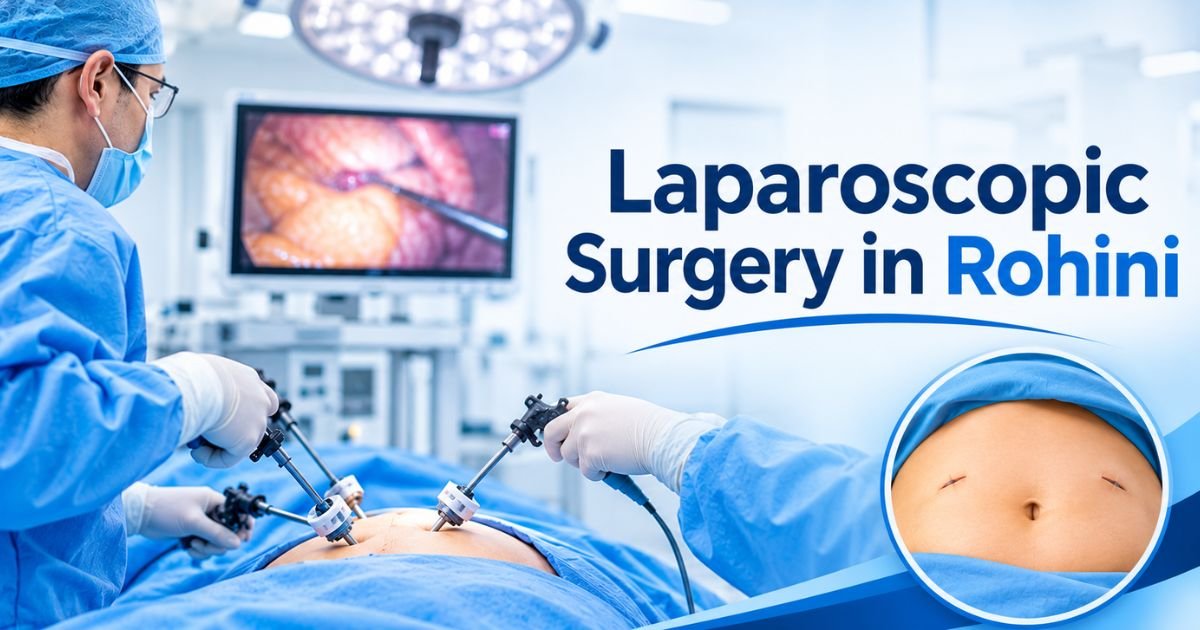
Laparoscopic surgery is commonly known as keyhole surgery or minimally invasive surgery. Instead of making one large incision, the surgeon makes a few small openings to access the affected area. A thin instrument called a laparoscope, fitted with a camera and light, helps the surgeon view internal organs on a monitor.
For patients considering Laparoscopic Surgery in Rohini, understanding how the procedure works is an important first step. The surgeon reviews the patient’s symptoms, medical history and diagnostic reports before deciding whether this approach is suitable.
The procedure may be recommended for certain abdominal conditions, including hernia, gallstones and appendicitis. The exact surgical technique depends on the affected organ, the complexity of the condition and the patient’s overall health.
What Conditions Can Be Treated Through Laparoscopic Procedures?
Laparoscopic procedures are used to treat or investigate different conditions affecting the abdomen. The recommended procedure depends on the medical problem and the organ involved.
The choice of Laparoscopic Surgery in Rohini depends on the patient’s diagnosis and whether a minimally invasive procedure is medically appropriate.
- Hernia: A hernia develops when tissue or an internal organ pushes through a weak area in the abdominal wall. It may cause a visible bulge, pain or discomfort while coughing, bending or lifting objects. Laparoscopic hernia repair may be considered for suitable patients.
- Gallstones: Gallstones are hardened deposits that develop inside the gallbladder. They may cause pain in the upper abdomen, nausea and digestive discomfort. When gallbladder removal is medically recommended, laparoscopic cholecystectomy may be an option.
- Appendicitis: Appendicitis occurs when the appendix becomes inflamed. It commonly causes abdominal pain that may move towards the lower right side. A laparoscopic appendectomy may be recommended in suitable cases.
- Abdominal conditions requiring investigation: When symptoms remain unexplained after initial tests, diagnostic laparoscopy may help doctors examine the internal organs more closely.
Laparoscopic Hernia Surgery in Rohini: When Is It Recommended?
A hernia can develop when a weak area in the abdominal wall allows internal tissue to push through. It may appear as swelling around the abdomen or groin. Some hernias cause mild discomfort, while others can interfere with walking, lifting and everyday activities.
Common symptoms include:
- Swelling in the abdominal or groin region.
- Pain or pressure when lifting something heavy.
- Discomfort in coughing, bending, and even standing.
- Feeling of heaviness in the swollen area.
- Swelling that becomes more noticeable during physical activity.
Laparoscopic hernia surgery in Rohini may be considered when a hernia causes persistent symptoms or when the doctor believes surgical repair is necessary. During the procedure, specialised instruments are used to repair the weak area. In selected cases, surgical mesh may provide additional support to the abdominal wall.
The choice between laparoscopic and open hernia repair depends on the hernia’s size, location, previous operations and the patient’s overall health. Patients considering laparoscopic hernia surgery in Rohini should discuss the expected benefits, possible complications and recovery requirements with their doctor.
A hernia that suddenly becomes very painful, hard or cannot be pushed back requires urgent medical attention, particularly if accompanied by vomiting or abdominal swelling.
Minimally Invasive Surgery in Rohini: Possible Benefits
One reason why doctors may prefer using a minimally invasive technique is that some operations can be done with small cuts. For individuals interested in Laparoscopic Surgery in Rohini, it is important to know both the advantages and disadvantages of the procedure.
Depending on the operation and the patient’s health, possible benefits include:
- Smaller incisions: Small openings may result in less noticeable scars than larger surgical cuts.
- Less wound discomfort: Some patients experience less discomfort around the incision sites.
- Earlier movement: Patients may be able to start walking and return to light activities earlier, depending on medical advice.
- Hospital stay: Some procedures may require a shorter hospital stay.
- Clear internal view: The surgical camera provides a magnified view of the operating area.
These benefits are not guaranteed for every patient. Every operation carries possible risks, including bleeding, infection, anaesthesia-related complications and injury to nearby structures. The surgeon should explain these risks before the procedure.
How to Choose the Right Laparoscopic Surgeon in Rohini?
Choosing a surgeon is an important part of the treatment process. Patients should understand the doctor’s qualifications, relevant experience and approach to patient care before making a decision.
Before choosing Laparoscopic Surgery in Rohini, patients should understand the surgeon’s experience, available treatment options and expected recovery.
Consider the following points:
- Medical qualifications: Check the doctor’s qualifications and experience with the procedure being considered.
- Accurate diagnosis: The doctor should explain what is causing your symptoms and whether surgery is necessary.
- Treatment alternatives: Ask whether medicines, observation or other treatment options may be suitable.
- Surgical facilities: Understand what facilities and medical support are available for the planned procedure.
- Follow-up care: Ask about wound care, medication, activity restrictions and follow-up appointments.
If you are also comparing an orthopedic hospital in Rohini for bone and joint concerns, remember that orthopedic treatment is different from abdominal surgical care. Choose a medical facility according to the condition you need evaluated.
Patients exploring laparoscopic hernia surgery in Rohini should ask whether laparoscopic or open repair is more suitable for their particular condition.
What to Expect During Laparoscopic Surgery Recovery Time?
Recovery varies according to the type of operation, the patient’s general health and whether complications occur. Understanding the recovery process is also an important part of preparing for Laparoscopic Surgery in Rohini.
Immediately after surgery: The medical team monitors the patient as the effects of general anaesthesia wear off. Mild pain, nausea or bloating may occur in some cases.
During the first few days: Patients may be encouraged to walk gently and gradually return to normal eating habits. The incision areas should be kept clean and cared for according to medical instructions.
Over the following weeks: Daily activities can be increased gradually. Heavy lifting, strenuous exercise and physically demanding work should be avoided until the doctor gives permission.
Follow-up appointments: The surgeon checks wound healing and reviews recovery progress. Patients should attend these visits and report any unusual symptoms.
Proper post-operative laparoscopic care is important. Contact your doctor if you experience fever, increasing pain, redness, unusual swelling, wound discharge or persistent vomiting.
Why Consider Airmid Hospital for Surgical Consultation?
Understanding your condition is the first step towards choosing appropriate treatment. Patients should have the opportunity to discuss their symptoms, diagnostic reports and available options before making a surgical decision.
Under the care of Dr. Amarjit Singh, patients can discuss their medical concerns and seek guidance about suitable treatment options. Patients considering laparoscopic hernia surgery in Rohini should receive an individual clinical assessment before deciding on an operation.
Book a Surgical Consultation at Airmid Hospital
Persistent abdominal pain, a noticeable hernia or recurring digestive discomfort should not be ignored. A medical evaluation can help identify the cause and determine whether surgery or another treatment is appropriate.
If you are considering laparoscopic hernia surgery in Rohini, speak with a qualified doctor about your condition, available procedures, possible risks and recovery requirements.
Contact Airmid Hospital to book a consultation and discuss your surgical treatment options.
Visit the Google Business Profile of Airmid Hospital for directions and business information.
Frequently Asked Questions
Laparoscopic surgery is a minimally invasive technique in which a surgeon uses a camera and specialised instruments through small incisions to perform certain operations.
No. Suitability depends on the hernia’s type, size, location, previous surgeries and the patient’s overall health.
Recovery depends on the procedure and the patient’s health. Some patients return to light activities within a few days, while complete recovery may take several weeks.
Neither approach is automatically better for everyone. The right option depends on the medical condition, surgical complexity and the surgeon’s assessment.
You can consult a qualified doctor at Airmid Hospital to discuss your symptoms, understand your diagnosis and explore suitable surgical options.