



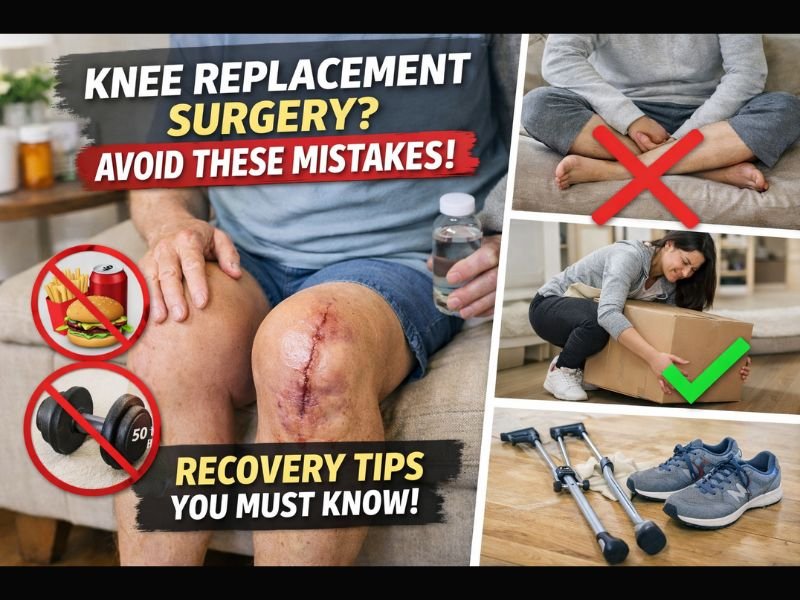
1. Diet & Nutrition After Knee Replacement Surgery
Nutrition plays a major role in healing and inflammation control.What Foods to Avoid After Knee Replacement Surgery
Many patients ask, what foods should I avoid after knee replacement surgery? Avoiding inflammatory foods can reduce swelling and discomfort. Avoid:- Highly processed packaged foods
- Sugary beverages and sweets
- Deep-fried snacks
- Excess salt
- Excess red meat
| Food Type to Avoid | Why Avoid It | Impact on Recovery |
| Sugary foods | Increase inflammation | Delays wound healing |
| Processed foods | High sodium | Increases swelling |
| Fried items | Poor digestion | Slower recovery |
Best Foods to Eat After Knee Replacement Surgery
If you’re wondering what to eat after knee replacement surgery, focus on healing nutrients. Recommended food after knee replacement surgery:- Lean proteins (dal, eggs, fish, paneer)
- Leafy green vegetables
- Citrus fruits
- Nuts and seeds
- Whole grains
- Maintain hydration
- Eat small, frequent meals
- Maintain a healthy weight
2. Pain & Recovery Timeline After Knee Replacement Surgery
Understanding the recovery pattern reduces fear and confusion.Understanding Postoperative Pain
Some level of pain after knee replacement surgery is normal. However, severe or increasing discomfort should be evaluated. Patients commonly report:- Swelling
- Warmth around the joint
- Mild to moderate knee pain
After Knee Replacement Surgery, How Long Does the Pain Last?
A common voice-search query is: after knee replacement surgery, how long does the pain last? Typically:| Recovery Stage | What Happens | Duration |
| First 2 weeks | Maximum swelling & stiffness | 10–14 days |
| 1–3 months | Gradual improvement | 90 days |
| 6 months | Major functional recovery | Varies |
Recovery Timeline and Healing Process
The overall recovery time after knee replacement surgery recovery time depends on age, weight, and physiotherapy compliance. Proper recovery after knee replacement surgery includes:- Gradual increase in walking
- Regular physiotherapy
- Monitoring swelling
3. Exercise & Movement After Knee Replacement Surgery
Movement is essential — but overdoing it is harmful.Recommended Exercise Routines
Structured exercise after knee replacement surgery improves joint strength and flexibility. Common exercises after knee replacement surgery include:- Ankle pumps
- Straight leg raises
- Heel slides
- Quadriceps strengthening
| Exercise | Purpose | Frequency |
| Heel slides | Improve range of motion | 10 reps × 3 |
| Leg raises | Strengthen thigh | 2–3 times daily |
| Walking | Restore mobility | As advised |
Avoiding Overexertion
Do NOT:- Lift heavy objects
- Sit cross-legged
- Climb stairs excessively
- Ignore pain signals
4. Precautions & Lifestyle After Knee Replacement Surgery
Adopting proper precautions after knee replacement surgery prevents complications.General Dos and Don’ts
Dos:- Follow the medication schedule
- Keep the wound clean
- Attend follow-up visits
- Maintain proper posture
- Avoid prolonged standing
- Avoid sudden twisting movements
- Avoid self-medication
Home Safety Measures
Creating a safe home environment is critical. Patients often ask about the best chair after knee replacement surgery. Choose a firm chair with armrests and proper height. Other safety measures:- Install grab bars in bathrooms
- Use anti-slip mats
- Elevate the leg during rest after knee replacement surgery
- Avoid low sofas
Long-Term Joint Health
Maintain:- Healthy weight
- Balanced diet
- Regular low-impact exercise
5. Mental Health & Motivation During Recovery
Many patients ask, “Why am I so tired after knee replacement surgery?” Fatigue is common due to:- Surgical stress
- Reduced activity
- Medication effects
6. Follow-up Visits & Monitoring Symptoms
Regular follow-ups help detect complications early. Consult a Joint Replacement Specialist in Rithala if you experience unusual swelling or persistent stiffness. Similarly, patients from Rohini can consult a Joint Replacement Specialist in Rohini for expert assessment. Monitoring symptoms ensures a smoother recovery after surgery.7. Local Knee Replacement Services
If you are searching for Knee Replacement Surgery in Rithala, expert care is available close to home. Residents looking for Knee Replacement Surgery in Rohini can access advanced facilities and structured rehabilitation programs. At Airmid Hospital, we focus on patient-centred recovery and advanced surgical expertise. Our team is known for delivering exceptional orthopedic care using modern knee replacement techniques. Many consider our senior consultant among the best knee replacement surgeons in Delhi for precision-driven outcomes. Airmid Hospital emphasises personalised rehabilitation protocols tailored to each patient’s lifestyle and age group.8. Quick Dos and Don’ts Checklist
Avoid:- Ignoring swelling
- Skipping physiotherapy
- Lifting heavy weights
- Eating inflammatory food
- Recommended exercises after knee replacement surgery
- Balanced diet
- Regular follow-ups
- Proper rest after knee replacement surgery
Conclusion: Your Safe Recovery Journey After Knee Replacement Surgery
Understanding what not to do After Knee Replacement Surgery is as important as knowing the right steps to follow. From proper nutrition and safe exercise routines to monitoring pain and following medical advice, each factor contributes to successful healing. By managing recovery after knee replacement surgery carefully, maintaining a structured diet after knee replacement surgery, and committing to physiotherapy, patients can significantly reduce complications and speed up recovery. If you still have concerns about what to expect after knee replacement surgery or ongoing discomfort, consult the experienced orthopaedic team at Airmid Hospital. We are committed to guiding you through every stage of your recovery journey. Book your consultation today with Airmid Hospital or visit our Google Business Profile to learn more about safe and advanced knee replacement care. exceptional orthopedic careFAQs About After Knee Replacement Surgery Recovery, Pain & Precautions
Avoid lifting heavy objects, sitting cross-legged, skipping physiotherapy, eating inflammatory foods, and ignoring swelling or persistent pain.
Pain usually reduces significantly within 4–6 weeks, though mild stiffness or discomfort may continue for 3–6 months.
Moderate pain is common for 10–14 days, gradually improving with medication, rest, and physiotherapy.
Expect swelling, mild to moderate pain, limited mobility initially, and gradual improvement with exercises and rehabilitation.
Avoid sugary foods, fried items, processed snacks, excessive salt, and carbonated drinks to reduce inflammation and swelling.
Eat protein-rich foods, leafy vegetables, fruits, whole grains, nuts, and stay well-hydrated for faster healing.
Light exercises begin within 24–48 hours under supervision, followed by structured physiotherapy.
Most patients resume daily activities within 6–12 weeks; full recovery may take up to 6 months.
Maintain proper posture, use supportive chairs, avoid sudden twisting, follow medications, and attend regular follow-ups.
Consult immediately if you notice severe pain, redness, fever, unusual swelling, or difficulty moving the knee.