

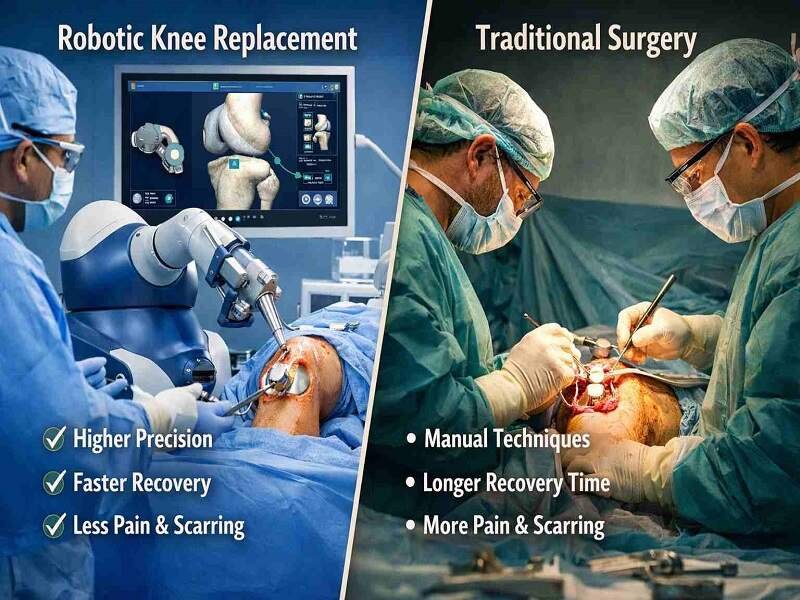
Knee replacement is a proven surgical solution for people living with severe knee pain, arthritis, or joint damage that limits daily movement. This procedure replaces the damaged joint surfaces with artificial components designed to restore mobility, reduce pain, and improve overall quality of life. Modern orthopedic care now offers both traditional and advanced techniques, including robotic-assisted procedures, allowing doctors to customize treatment based on each patient’s condition.

In this category, you will find reliable information about knee replacement procedures, recovery timelines, safety considerations, and treatment options. We focus on clear, practical guidance supported by trusted medical standards and real clinical practices. Whether you are researching symptoms, comparing surgical methods, or preparing for surgery, our goal is to help you make informed healthcare decisions with confidence.

Robotic knee replacement vs traditional knee surgery comparison showing precision technology and manual surgical procedure

Robotic Knee Replacement vs Traditional Surgery: Which Option Delivers Better Results?

Knee pain may make even the most basic things, such as climbing the stairs or running after your grandchildren, a daily challenge. The question that most frequently comes to the mind of many patients who research knee replacement surgery in Rohini is: Is it better to use robotic technology or have a traditional approach? It is a legitimate worry. After all, when a surgeon is speaking of robots, they envision things ranging from sci-fi accuracy to a machine replacing the operating room. Calm down--the robot does not substitute the surgeon. It only makes the surgeon more precise. We will dissect the distinction between robotic knee replacement and conventional surgery using objective facts, professional experience, and reliable medical literature in this guide. We want to do one thing, to make you make a steady and knowledgeable decision. Understanding...

Continue reading