



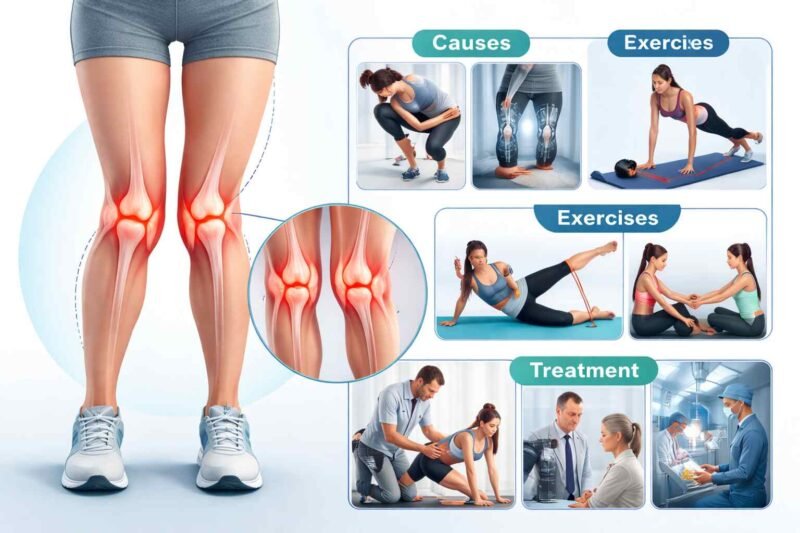
Knock knees can make simple activities—walking, running, or even standing for long hours—feel uncomfortable. Many adults worry when their knees touch while their ankles stay apart. The good news? You can manage this condition with the right approach. In severe cases, doctors may suggest knee replacement surgery in Rohini, but most people improve with exercises, posture correction, and timely medical advice.
If you want to learn how to fix knock knees in adults, this guide explains the causes, symptoms, exercises, and treatment options using trusted medical information. We will keep it simple, practical, and honest—no miracle cures, no unrealistic promises.
What Are Knock Knees?
Knock knees are referred to as genu valgum by doctors. At this state, when standing straight, your knees bend inwards and touch each other. Your ankles are separate, and Airmid Hospital makes a conspicuous distance.
The American Academy of Orthopaedic Surgeons (AAOS) states that slight alignment problems may manifest themselves in childhood and that they may resolve on their own. Nevertheless, once the condition persists into adulthood, it can cause joint stress and chronic pain.
There are those with mild knock knees, which are painless. Others have a severe knock knee condition that makes walking, posture, and stability of the knee difficult.
The following is a fast method of checking knock knees at home:
- Keep straight with knees bent.
- Watch the space between the ankles.
- If the gap measures more than 8–10 cm, you may have knock knees
- In the event of pain or instability, it is advisable to see a specialist.
This is an easy test that will give a rough idea, but a medical exam will provide exact results.
Explore More : Robotic Knee Replacement vs Traditional Surgery: Which Option Delivers Better Results?
Common Causes of Knock Knees in Adults
Knowing the cause would assist you in making the correct choice of treatment. Physicians tend to find one or more of the following reasons:
1. Weak Muscles and Poor Posture
The poor hip and thigh muscles are not able to help in correct knee position. Spending hours on the chair, being on the phone throughout, and not exercising aggravates the problem.
2. Obesity or Excess Weight
Additional body weight causes pressure on knee joints. The Mayo Clinic validates that obesity increases the chances of joint misalignment and knee pain.
3. Arthritis
Osteoarthritis destroys cartilage and alters the structure of the joints. This damage may over time cause push inward of the knees.
4. Previous Injury or Surgery
Fractures or injuries to the ligaments occasionally heal at the wrong angle. This dislocation may result in knock knees in old age.
5. Vitamin Deficiency
Deficiency in vitamin D or calcium makes bones weak. According to the National Health Service (NHS), joint alignment may be influenced by poor bone strength.
Symptoms You Should Not Ignore
Most adults disregard the initial symptoms until the pain becomes critical. Look out the following symptoms:
- Knees touching while standing
- Uneven walking pattern
- Knee or hip pain
- Avoids climbing or walking up the stairs.
- Pain in the joints following prolonged sitting.
In case of any persistence of these symptoms, consult the most appropriate orthopedic hospital in Rohini to undergo a professional examination. Prevention involves early treatment which prevents complications in the long run.
Exercises for Knock Knees That Actually Work
Exercise is still the best non-surgical knock knee treatment that is used to treat mild to moderate cases. These stretches make muscles stronger and enhance posture.
The Cleveland Clinic advises that hips, thighs, and core should be strengthened in order to stabilize the knee.
1. Side Leg Raises
This workout focuses on hip muscles.
How to do it:
- Lie on one side
- Raise the rear leg gradually.
- Hold for 3 seconds
- Lower gently
- Repeat 10–15 times
2. Wall Squats
Wall squats enhance balance and strength of the thigh.
Steps:
- Stand with your back against a wall
- Slide down slowly
- Hold the squat for 10 seconds
- Return to standing
3. Clamshell Exercise
Clamshells enhance hip stabilizers.
Instructions:
- Lying on your knees with your side turned.
- Keep feet together
- Slowly open the top knee.
- Close gently
These knock knee exercises are simple and can only be effective when done regularly. Get them out of your system, as you would brush your teeth–then trouble is renewed.
How to Fix Knock Knees in Adults at Home
Surgery is not necessarily always necessary. Small lifestyle changes can help many adults.
The following steps can be implemented immediately:
Maintain Healthy Weight
Knee joint stress is alleviated with weight control. Mobility can be enhanced even by the loss of 510% of body mass.
Wear Supportive Footwear
Flat or non-supportive shoes aggravate alignment. Wear shoes having good arch support.
Improve Sitting Posture
Do not sit cross-legged too long. Keep the feet level on the floor.
Use Knee Braces if Recommended
In some cases, doctors recommend braces to stabilize joints on movement.
These few habits are the basis of the home repair of knock knees in adults.
Medical Treatment Options for Knock Knees
Opting to administer medical care is possible when there is failure to the exercises and change of lifestyle.
Physiotherapy
The first-line treatment is still physiotherapy. To correct the alignment, therapists develop individualized exercise programs.
Medication
To decrease pain and swelling, the doctors can prescribe anti-inflammatory drugs.
Orthotics
Cushions in shoes serve to evenly redistribute the body weight.
Surgery
Surgery is only done under serious circumstances. Surgical procedures can involve bone repair or knee replacement surgery in rohini when the damage of the joint is irreversible.
Do not panic on the mentioning of the word surgery. It is not recommended until after conservative treatments have been tried and failed by surgeons.
When Should You See a Specialist?
You are to consult the doctor in case:
- The duration of pain exceeds 2 weeks.
- Walking becomes difficult
- Knees feel unstable
- Symptoms are not improved with exercise.
Physical examinations and imaging procedures, such as X-rays, can be used to diagnose the condition by a qualified orthopedic doctor.
In the case you are in the area, you can visit Google My Business to find out consultation details and directions of the Airmid Hospital. Most patients will be willing to go to the best orthopedic hospital in Rohini since it is known that early diagnosis will avoid surgery most of the time.
Can Knock Knees Be Permanently Fixed?
Many adults do get better with regular treatment, yes.
Success depends on:
- Severity of the condition
- Age and general health.
- Commitment to exercise
- Timely medical care
The Journal of Orthopaedic Research suggests that muscle strengthening and alignment correction alleviate pain and increase the functionality of the knee in most patients.
Nevertheless, severe joint damages can necessitate knee replacement procedures in Rohini to regain functionalities and quality of life.
Prevention Tips That Actually Work
Prevention is time, money and pain saving.
Adhere to the following basic habits:
- Stay physically active
- Be healthy in weight.
- Stretch regularly
- Eat calcium-rich foods
- Get sufficient sunlight to get vitamin D.
You have your knees to carry you through. Treat them nice, we will treat you in kind.
Final Thoughts
Adults do not need complex interventions to learn how to correct their knock knees. This can be enhanced by exercise, correction of posture and early medical attention to most people. Extreme cases would require surgery but that is the last step not the first.
Listen to your body. Stay consistent. Seek professional advice when needed. And remember—your knees carry you through life, so give them the support we deserve. If you need expert guidance, personalized treatment, or want to discuss your condition with a specialist, feel free to contact us today. Our team is always ready to help you take the next confident step toward better knee health.