


Most people don’t realise anything is wrong with their knees until they begin to feel uncomfortable walking or start to have their knees touch while standing. This condition is usually called Knock Knee and can affect children or adults and may have an effect on posture, balance and mobility over time.
Knock knees are referred to in a medical sense as Genu Valgum – knees bent in, ankles apart. Children with mild symptoms may recover on their own, while severe symptoms may need medical treatment, physiotherapy or even more sophisticated treatments such as knee replacement surgery in rohini for severe adult symptoms when the joint is damaged.
The good news? Proper diagnosis and treatment can greatly restore mobility and quality of life. No, your knees weren’t meant to cuddle up and hold hands forever.
What is Knock Knee?
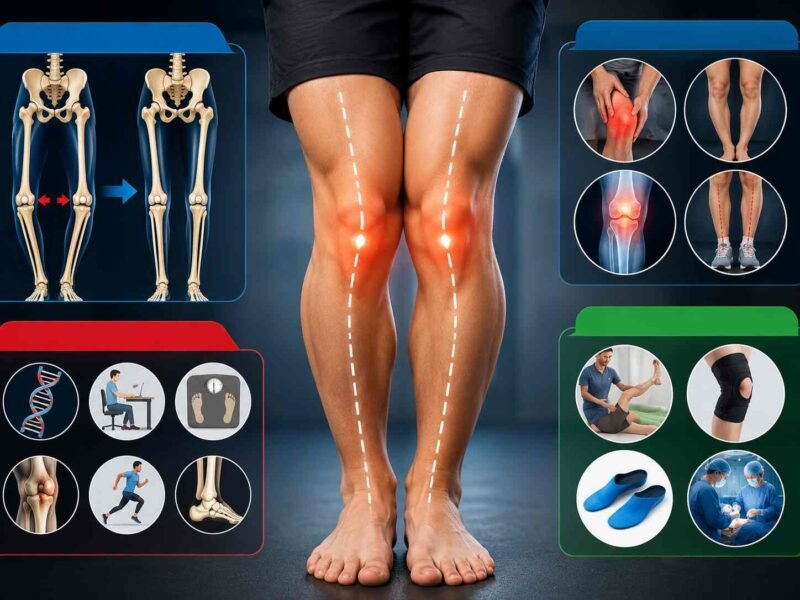
Knock knee is an orthopedic condition that involves both knees being bent inwards and touching when standing up straight. The ankles do not come together when the knees touch.
Typically it develops in childhood as a result of Bone Development. Many kids will grow out of this.Many children will grow out of this condition. But in some cases, the condition persists to adulthood and causes pain, imbalance or difficulty walking.
A serious problem of lower limb alignment, which may involve the Knee Joint and the muscles around it, is called severe knock knees.
Also Read : How to Correct Bow Legs in Adults: Exercises, Treatment & Recovery Tips
Common Causes of Knock Knee
Several factors can contribute to knock knees. Some remain harmless, while others need medical treatment.
1. Natural Growth in Children
Children between ages 2 and 7 commonly develop temporary knock knees during growth phases. In most cases, leg alignment normalizes naturally.
Experts in Pediatrics consider mild childhood genu valgum a normal developmental stage.
2. Genetic Factors
Some people inherit abnormal Joint Alignment patterns from family history. Genetics can influence bone structure and lower limb development.
3. Nutritional Deficiencies
Deficiencies in vitamin D and calcium can cause bones to become weak and affect alignment.
Some diseases, such as rickets, can make the legs much more likely to be badly crooked.
According to the World Health Organization, proper nutrition plays an important role in healthy musculoskeletal development.
4. Obesity
Extra weight on knees from excess weight. This pressure can be exacerbated, over time, to cause knee pain due to poor alignment.
Imagine putting all the shopping in a cart with not all the wheels even. Things eventually get stuck.
5. Injury or Arthritis
The Knee Joint may be damaged and may not be aligned properly by previous fractures, infections or arthritis.
For severe osteoarthritis, the adults may need to undergo advanced treatment in rohini like corrective surgery or knee replacement surgery.
Knock Knee Symptoms
The severity of symptoms varies from person to person.
Common knock knee symptoms include:
- Knees touching while ankles remain apart
- Knee Pain during walking
- Walking Difficulty
- Poor posture
- Uneven gait
- Hip or ankle discomfort
- Reduced balance
- Joint stiffness
Some people also experience faster shoe wear on one side due to abnormal Lower Limb Alignment.
If walking feels awkward or tiring regularly, your body may already be signaling a joint alignment issue.
How Doctors Diagnose Knock Knee
Doctors usually diagnose knock knees through physical examination and imaging tests.
Common diagnostic methods include:
- Physical posture assessment
- Gait analysis
- X-rays
- Bone structure evaluation
- Joint Alignment measurements
Orthopedic specialists examine the angle between knees and ankles to determine severity.
In advanced cases, hospitals like Airmid Hospital can also be located through their Google Business Profile for orthopedic consultation and treatment guidance.
Knock Knee Treatment Options
The best treatment depends on age, severity, and underlying causes.
1. Observation in Children
Mild childhood knock knees often improve naturally as bones grow.
Doctors usually monitor progress instead of starting aggressive treatment immediately.
Parents should avoid panic because slightly awkward walking during growth phases often resolves on its own.
Children are still learning coordination. Sometimes they run like tiny superheroes with unbalanced powers.
2. Physiotherapy and Exercises
He plays a major role in non-surgical knock knee treatment.
Physiotherapy helps:
- Improve muscle strength
- Correct posture
- Enhance mobility
- Support Joint Alignment
- Reduce Knee Pain
Exercises often target:
- Quadriceps
- Hip muscles
- Hamstrings
- Core stability
This remains one of the most effective no knees problem solution methods for mild to moderate cases.
3. Weight Management
Maintaining healthy body weight reduces stress on the Knee Joint.
Even moderate weight loss can improve mobility and decrease pain levels significantly.
4. Orthopedic Braces
Doctors sometimes recommend braces or corrective footwear for growing children.
These devices support better knee positioning during movement.
5. Surgery for Severe Cases
Adults with advanced deformity or arthritis may require surgical correction.
Severe cases sometimes need:
- Osteotomy
- Realignment procedures
- Knee replacement surgery
People searching for reliable knee replacement surgery in Rohini often consult specialists at the best hospital in Rohini for advanced orthopedic care.
Can Knock Knee Be Prevented?
Not every case can be prevented, especially genetic or developmental conditions. However, some healthy habits can lower the risk.
Prevention tips include:
- Balanced nutrition
- Vitamin D intake
- Regular physical activity
- Weight management
- Early orthopedic evaluation
Healthy Bone Development and strong muscles support better long-term knee health.
When Should You See a Doctor?
You should seek medical advice if:
- Knee pain becomes severe
- Walking difficulty increases
- One leg looks more affected
- Symptoms continue into adulthood
- Joint stiffness worsens
- Mobility declines
Early treatment prevents complications and improves recovery outcomes.
Many patients searching for the best hospital in Rohini choose specialized orthopedic centers for faster diagnosis and treatment planning.
Final Thoughts
While Knock Knee appears to be a realignment problem, serious cases can impact on how you move, how you stand and your long-term joint health. Early diagnosis means that treatment is easier and often will prevent future complications.
Treatment of mild cases involves growth, exercise and physiotherapy. If the deformity is serious, advanced orthopedic surgery and special treatment might be necessary.
Do not dismiss knock knee symptoms if they persist or if walking is uncomfortable. A professional assessment can help guide you in the correct direction of treatment before the issues get worse.
You can also reach out to orthopedic experts at Airmid Hospital commonly reputed as the trusted best hospital in Rohini for joint care and mobility treatments to receive expert guidance and advanced treatment options.
Being straight is not the only part of being healthy. They help you to live your life without pain slowing you down.