



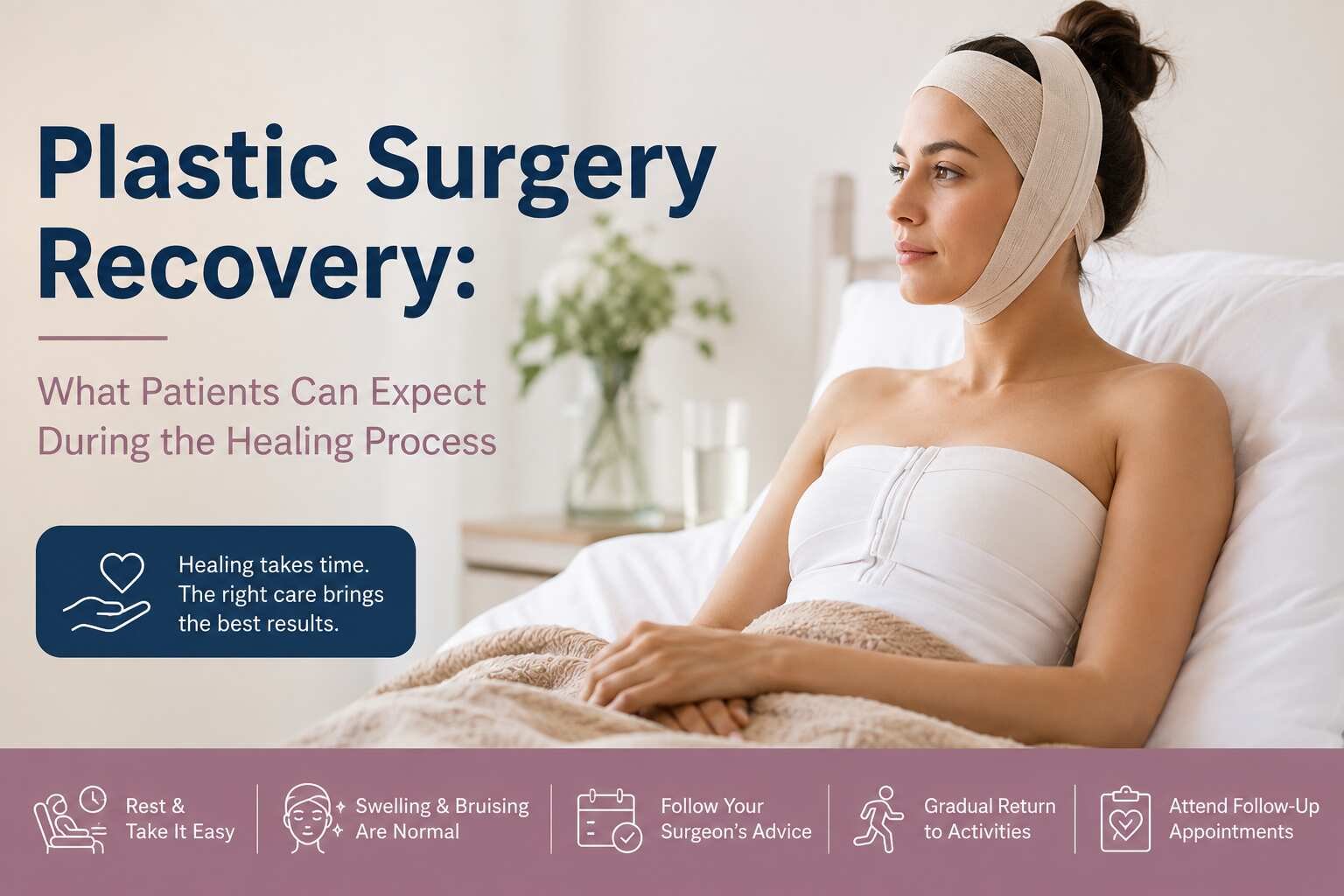
Having surgery is only one part of the process. What happens afterwards matters just as much.
If you’re preparing for a procedure, you may be wondering how you’ll feel when you get home, how long the swelling will last, when you can return to work, or when you’ll finally see the result you’re expecting.
The truth is, plastic surgery recovery isn’t exactly the same for everyone. The type of procedure, your general health and the way your body heals can all affect the process.
Knowing what to expect can make those first few days and weeks feel a little less uncertain.
The first few days after surgery
The first few days are usually when you’ll need to take things easiest.
You may experience some swelling, bruising, soreness or tightness around the treated area. How much discomfort you have will depend on the procedure and your individual situation.
Your surgeon will give you instructions about medicines, wound care, movement and other things you need to do at home.
Follow those instructions rather than trying to copy someone else’s recovery routine.
It’s also a good idea to have someone available to help you if your surgeon recommends it, particularly immediately after surgery or anaesthesia.
Don’t expect everything to look normal straight away
This is one of the biggest things patients should know about plastic surgery recovery.
You may look in the mirror a day or two after surgery and wonder why the area doesn’t look anything like you expected.
Try not to judge the result too early.
Swelling and bruising can temporarily change the appearance of the treated area. Depending on the procedure, it may take weeks or longer for things to settle.
Your surgeon can tell you what is normal for your particular procedure and when you should expect to see more noticeable changes.
Rest is important, but complete bed rest may not be
After surgery, your body needs time and energy to heal.
That doesn’t necessarily mean staying in bed all day.
Your surgeon may recommend gentle movement or short walks once it is safe to do so. Movement can be helpful during recovery, but you should avoid activities that your doctor hasn’t cleared you to do.
For example, heavy lifting, strenuous exercise or certain movements may need to be avoided for a period of time.
Don’t try to speed things up because you feel better one morning. Healing can continue even when you start feeling more like yourself.
Taking care of the surgical area
You’ll receive specific instructions about looking after the treated area.
Depending on the procedure, this might involve keeping the area clean, changing dressings, taking prescribed medicines or avoiding pressure on certain areas.
Follow the instructions you’ve been given.
Don’t apply creams, oils or other products to the surgical area unless your medical team has said they’re appropriate.
If you’re unsure about wound care, ask. You don’t have to figure it out yourself.
When can you return to work?
There’s no universal answer.
Someone with a desk job may be able to return sooner than someone whose work involves physical activity. The procedure itself also makes a difference.
Your surgeon can give you a more realistic idea of when you can return to work.
If your job involves lifting, bending, long periods of standing or strenuous activity, make sure you mention that when discussing your recovery.
It’s better to plan enough time off than to return too early and put unnecessary strain on your body.
What about exercise?
This is another area where people sometimes get impatient.
You may feel well enough to exercise before your body is actually ready.
Your surgeon will tell you when you can gradually return to physical activity. Until then, avoid pushing yourself.
A short walk may be fine when your doctor allows it, while running, weight training or other strenuous exercise may need to wait longer.
The safest approach is to increase activity gradually rather than trying to get back to your old routine immediately.
Keep your follow-up appointments
Follow-up visits aren’t just a formality.
They give your surgeon an opportunity to check how you’re healing and answer questions that may have come up after you returned home.
Sometimes patients notice something during recovery and immediately start searching online for an explanation.
It’s understandable, but the internet can’t examine your wound or know the details of your surgery.
If something concerns you, tell your medical team.
At Airmid Hospital, follow-up care allows patients to discuss their recovery and any concerns that come up during the healing process.
When should you contact your doctor?
Some swelling, bruising and discomfort can be expected after surgery. But you should know what warning signs your medical team has asked you to watch for.
Contact your doctor if you notice anything unusual or if your symptoms are getting worse rather than improving.
Your surgeon may have given you specific instructions about signs of infection, bleeding, severe pain, fever or changes around the surgical area.
Don’t wait if you’re genuinely concerned.
It’s much better to ask and be reassured than to ignore something because you assume it’s part of normal healing.
Be patient with the final result
One of the hardest parts of plastic surgery recovery can simply be waiting.
You may feel excited about seeing the final result, but healing doesn’t happen overnight.
Swelling can take time to settle, scars can gradually change in appearance and the treated area may continue to feel different for a while.
Try not to compare your recovery with somebody else’s.
A friend may have recovered quickly from a similar procedure, while your body may take longer. That doesn’t automatically mean anything is wrong.
Your surgeon is in the best position to tell you whether your progress is within the expected range.
If you’re choosing a surgeon
If you’re searching for a plastic surgery specialist in rithala, don’t only ask about the procedure itself.
Ask how patients are supported after surgery too.
Find out about follow-up appointments, recovery instructions and who you should contact if you have a concern after going home.
Good aftercare is an important part of the overall experience.
Read also
Plastic Surgery vs Cosmetic Surgery: What’s the Difference and Which One Is Right for You?
If you’re still deciding what type of procedure may be relevant to your situation, our guide explains the difference between plastic and cosmetic surgery and where the two can sometimes overlap.
Final Thoughts
Good plastic surgery recovery takes patience.
You may want to get back to your normal routine quickly, but giving your body enough time to heal is important. Follow your surgeon’s instructions, attend your follow-up appointments and don’t ignore anything that feels unusual.
Try not to compare your recovery with photographs or other people’s experiences. Your healing process belongs to you.
Airmid Hospital encourages patients to understand what recovery may involve before going ahead with treatment. You can also find Airmid Hospital through our Google Business Profile for local information.
If you have questions about recovery or would like to discuss your concerns, Contact Us through the official website.
Frequently Asked Questions
How long does plastic surgery recovery take?
It depends on the procedure and the individual. Some people return to light activities fairly quickly, while other procedures require several weeks or longer for recovery.
Is swelling normal after plastic surgery?
Swelling can be a normal part of healing, but the amount and duration vary. Your surgeon can tell you what to expect after your specific procedure.
When can I exercise again?
Your surgeon will advise you when it’s safe to restart physical activity. Strenuous exercise may need to be avoided until your body has had enough time to heal.
When will I see the final result?
This varies from one procedure to another. Swelling and other temporary changes can make it difficult to judge the result immediately after surgery.