



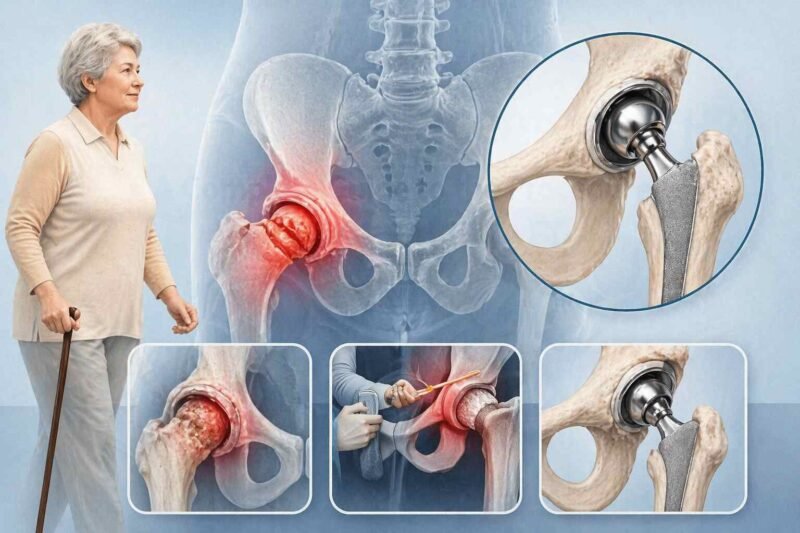
The daily life can gradually become dominated by hip pain. Initially, you can feel stiffness following a tedious walk. Then, very straightforward things such as climbing the stairs or stepping out of a chair are uncomfortable. Doctors can suggest total hip replacement as a permanent solution when the pain begins to disrupt normal activities.
Numerous patients who are looking to find the best hospital in Rohini would like to have clear and dependable information before making a choice. It is a clever idea. Surgery is a big step and knowledge on the process can help to reduce anxiety and enhance outcomes. This manual describes the process in easy terms, by reliable medical advice of medical bodies such as the American Academy of Orthopaedic Surgeons and the National Health Service.
We will go through all you should know before the procedure–step by step.
What Is Total Hip Replacement?
Total hip replacement surgery is a surgical procedure where surgeons use an artificial joint to replace a broken hip joint. The prosthesis, also known as this artificial joint, assists in restoring the movement and alleviating the pain.
In medical terminology, doctors refer to the acronym THR that means Total Hip Replacement. The short form THR full form in medical may also be found in the medical reports.
The hip has a ball-and-socket joint. Bones move easily on smooth layer of cartilage. As cartilage gets worn out by arthritis or damage, bone rubs against other bones. This friction results in pain, stiffness and lack of mobility. Replacement joint replaces the damaged surfaces and restores functionality.
The American Academy of Orthopaedic Surgeons reports that hip replacement has been one of the most successful orthopedic surgeries with high levels of patient satisfaction and pain relief in the long run.
Also Read : How to Fix Knock Knees in Adults: Causes, Exercises, and Treatment Options
When Do Doctors Recommend Total Hip Replacement?
Surgery is normally recommended after non-surgery procedures have failed by doctors. Such interventions can be comprised of medicine, physiotherapy, or diet modifications.
In case the symptoms are severe and persistent, you might require total hip replacement.
Common warning signs include:
- Pain in the hip during motion or repose.
- Problems with walking or standing long distances.
- Rigidity which restricts normal everyday life.
- Sleep disturbing pain.
- Loss of flexibility of hip bending or rotation.
These symptoms can be a pointer to severe joint damage. It is possible to avoid complications by consulting an orthopedic specialist in advance.
Most families begin to search for the best orthopedic hospital in Rohini at this point since specialized attention is better in diagnosing and treating diseases.
Conditions That Can Lead to Hip Replacement
A number of illnesses may harm the hip joint in the long run. The knowledge of the cause will assist doctors in selecting the best treatment.
Osteoarthritis
Osteoarthritis is the most common cause of hip replacement. It arises when cartilage is worn off due to old age or stress.
Rheumatoid Arthritis
It is an autoimmune disorder that results in inflammation of the joints, resulting in pain and stiffness.
Hip Fracture
Severe fractures, particularly in the elderly, can mean that the joint needs to be replaced to enable movement.
Avascular Necrosis
The condition arises when blood supply to the hip bone is reduced leading to tissue damage in the bone.
According to the World Health Organization, musculoskeletal diseases are the major cause of disability in the global world. With proper treatment, mobility and quality of life can be greatly enhanced.
How to Prepare for Total Hip Replacement Surgery
Education is a significant part of a successful operation and recovery. Well prepared patients tend to get fewer complications.
Medical evaluation is normally done thoroughly by doctors prior to surgery. This assessment will make sure that the patient is physically fit to undergo the procedure.
Common preparation procedures are:
- Blood tests and scans.
- Medication history.
- Evaluation of heart and lung wellbeing.
- Discussion about anesthesia
Changes in lifestyle are also conducive to recovery. As an example, smoking cessation helps to heal more quickly and decrease the risk of infection. The Centers of Disease Control and Prevention attest that smoking predisposes surgical complications.
Patients are also to prepare their home environment. Recovery can be made easier with simple modifications like placing handrails or support by the family.
What Happens During Total Hip Replacement Surgery?
The average time of total hip replacement surgery is one to two hours. It is operated by a trained surgical team, in a sterile operating room.
In the process, the doctors are guided by a definite order. To begin with, Airmid Hospital provides anesthesia to avoid pain. The surgeon will then remove bone and cartilage damage on the hip joint. Subsequently, the man-made joint parts are inserted in place. Lastly, the surgeon stitches the incision.
The length of stay of patients in the hospital is normally between one to three days. After surgery, medical personnel check progress and promote light exercises.
In case of any of the directions, consultation details, or service information, you can find it easy to locate Airmid Hospital on Google My Business. This assists patients in scheduling visits and interacting with the healthcare providers effectively.
Benefits of Total Hip Replacement
Total hip replacement has the primary aim of enhancing mobility and alleviating pain. The majority of the patients report significant post-recovery improvements.
Key benefits include:
- Reduction of chronic hip pain.
- Improved walking ability
- Better joint flexibility
- Increased independence
- Improved quality of life.
The British Orthopaedic Association gave research results that indicate that over 90 percent of hip replacements prove to be effective at least 15 years.
These outcomes render hip replacement as one of the best orthopedic surgeries today.
Risks and Possible Complications
All surgery is risky. Being aware of these risks will assist patients in making informed choices.
The potential complications can be:
- Infection
- Blood clots
- Joint dislocation
- Wear of implants with time.
- Nerve injury
In contemporary healthcare, serious complications are rare when the procedure is performed by more experienced surgeons. Risk can be greatly minimized by selecting the most suitable hospital in rohini having trained experts and good hygiene.
Preventive treatments are also offered by doctors, including antibiotics and blood-thinning medication, to safeguard patients on their way back to health.
Total Hip Replacement Recovery: What to Expect
Postoperative recovery is a long process, yet consistent improvement will result in fantastic outcomes.
The majority of patients start walking with the help a day after surgery. Premature labor enhances blood flow and minimizes complications.
The rehabilitation process tends to be a slow process:
- First several days: Light activity and simple exercises commence.
- First six weeks: Walking and day-to-day activities get better.
- 3-6 months: Strength and flexibility gain.
- One year: It is typical to recover fully in one year.
This slow recuperation characterizes the recovery of total hip replacement. Harmony with physiotherapy is significant in success.
The National Health Service also stresses that regular rehabilitation exercises can be used to regain the strength and mobility of the joints.
Tips for a Smooth Recovery
Easy practices can help to recover more quickly and easily. Observing medical advice will see patients resume normal practice earlier.
Doctors often recommend:
- Regularly attend physiotherapy.
- Eat a well-balanced and nutritious diet.
- Maintain cleanliness of the surgical wound.
- Do not make abrupt or excessive movements.
- Follow prescribed medications
Patients that adhere to these rules tend to heal more readily and be back on their feet sooner.
A number of families are willing to be treated at the most preferred orthopedic hospital in rohini due to the fact that coordinated care enhances the recovery results and patient satisfaction.
How Long Does a Hip Replacement Last?
One of the most widespread issues that patients take into account before having a total hip replacement is durability.
Contemporary implants have a lifespan of 15-20 years. Others have a longer life span, depending on the way of life and general well-being.
Exercise, a healthy weight and periodic follow-up checkups are the ways of prolonging the life of the artificial joint.
According to the American Academy of Orthopaedic Surgeons, the majority of patients are able to enjoy a long period of good joint function following the surgery.
Final Thoughts
Total hip replacement has changed the lives of millions of people as it has alleviated pain and regained mobility. Medical technology is still improving, thus making the procedure safer and more efficient.
Whether or not to have surgery must always be discussed with an experienced orthopedic specialist. Good preparation, trustworthy information and professional care is the foundation of successful results.
If hip pain limits your daily activities, early medical consultation can help prevent complications and improve long-term health. Contact us today to schedule a consultation with our orthopedic experts and take the first step toward pain-free movement and better joint health.