



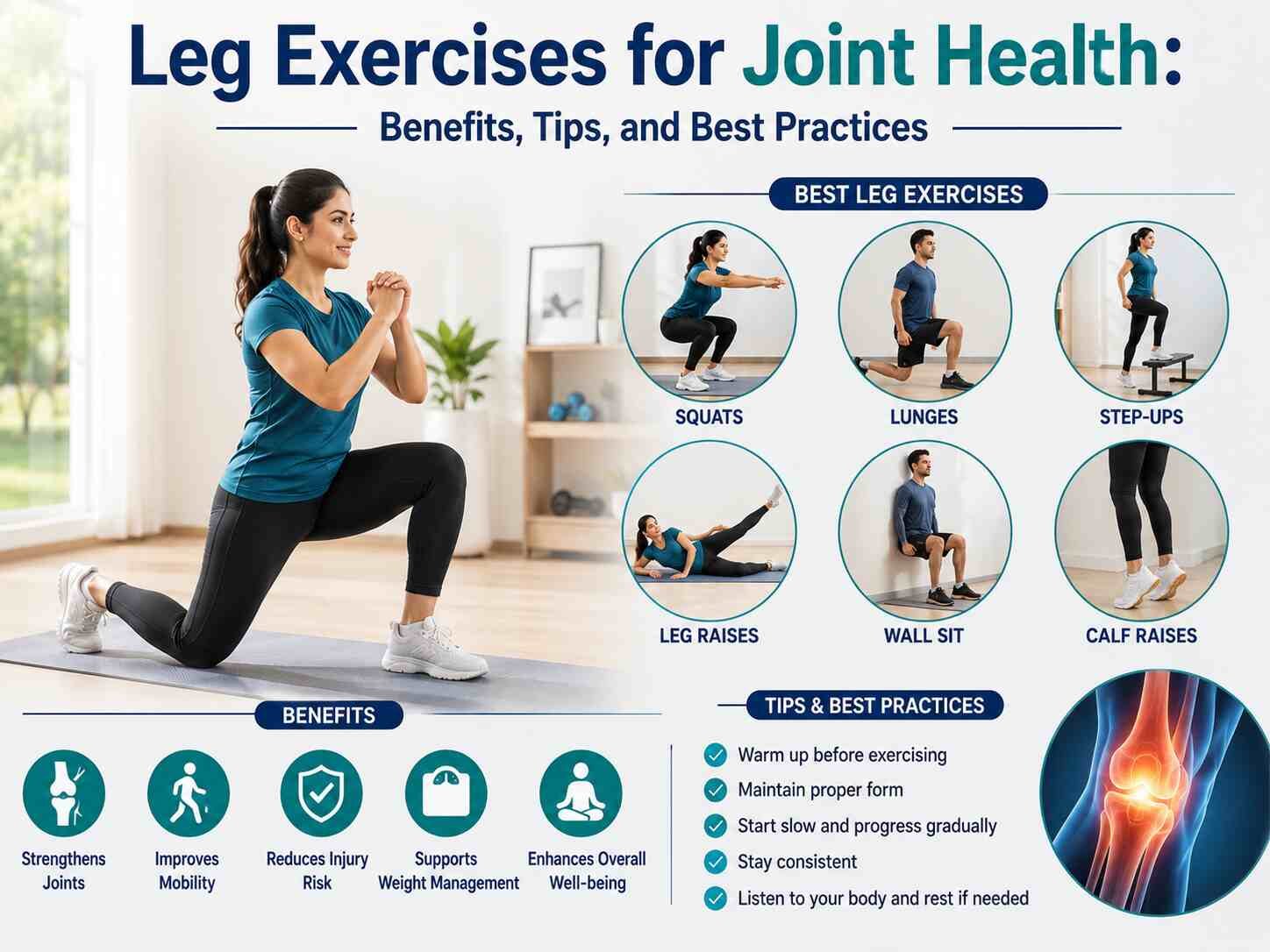
Healthy legs play an important role in maintaining independence, balance, and an active lifestyle. Regular leg exercises for joint health can help improve strength, flexibility, and mobility while supporting the overall function of your joints.
Many people ignore leg strength until they experience stiffness, discomfort, or difficulty with daily activities. Simple movements can make a big difference in maintaining healthy knees, hips, and ankle joints.
People looking for professional orthopedic guidance can consult a best hospital in Rohini for expert advice, diagnosis, and treatment options. Airmid Hospital provides healthcare support for various orthopedic concerns, helping patients understand the right approach for better joint health.
Exercise is not only for athletes. Your legs work every day while walking, standing, climbing stairs, and performing routine activities. Giving them proper care helps maintain long-term mobility.
Why Leg Exercises Are Important for Joint Health
Your legs contain a complex system of bones, muscles, ligaments, tendons, and joints that work together to create movement.
Regular exercise helps support the Musculoskeletal System by improving:
- Muscle strength
- Joint stability
- Balance
- Flexibility
- Movement control
Strong muscles around your joints provide better support and reduce unnecessary stress on areas like the knee joint and hip joint.
Without regular activity, muscles may become weaker, which can affect posture, balance, and overall mobility.
Also Read: Life After Knee Replacement: Recovery, Mobility, and Daily Activities
Benefits of Leg Exercises for Joint Health
1. Improves Muscle Strength
Strong leg muscles support your joints during everyday movements.
Exercises that target the thighs, calves, and surrounding muscles help improve stability and reduce pressure on joints.
For example, stronger muscles around the knee can provide better support during walking, climbing stairs, and other activities.
2. Supports Better Mobility
Mobility refers to how easily you can move your body without discomfort or restriction.
Regular mobility exercises help maintain smooth joint movement and improve daily function.
Better mobility can help with:
- Walking comfortably
- Maintaining balance
- Performing household activities
- Staying physically active
Movement keeps joints active, and active joints often perform better than inactive ones.
3. Helps Maintain Flexibility
Flexibility allows muscles and joints to move through a healthy range of motion.
Regular flexibility exercises can help reduce stiffness and improve movement quality.
Stretching routines may support:
- Better posture
- Improved coordination
- Reduced muscle tightness
Flexibility becomes especially important as people age because natural changes in muscles and joints can affect movement.
Also Read: Top Causes of Leg Pain While Walking and How to Manage Them
Best Leg Exercises for Joint Health
1. Straight Leg Raises
Straight leg raises are commonly recommended as simple strengthening movements.
They focus on the muscles around the knee without putting excessive pressure on the joint.
Benefits include:
- Improving thigh muscle strength
- Supporting knee stability
- Building controlled movement
Always perform exercises with proper technique and follow professional advice if you have existing joint problems.
2. Squats With Proper Form
Squats are effective lower body exercises when performed correctly.
They strengthen:
- Thigh muscles
- Hip muscles
- Lower body stability
People with knee discomfort should perform modified versions under guidance.
Incorrect form can increase stress on joints, so quality matters more than quantity.
3. Leg Extensions
Leg extensions help strengthen muscles that support the knee joint.
They are often included in rehabilitation programs because they focus on controlled muscle activation.
A Physiotherapist can suggest suitable variations based on individual needs.
4. Walking
Walking is one of the simplest forms of exercise for maintaining joint health.
Regular walking supports:
- Blood circulation
- Muscle activity
- Joint movement
- Overall fitness
Low-impact activities are often easier on joints while still providing health benefits.
Low-Impact Leg Exercises for Joint Support
People with joint discomfort may benefit from low-impact leg exercises.
These exercises reduce stress on joints while helping maintain strength and movement.
Examples include:
- Swimming
- Cycling
- Gentle stretching
- Controlled walking
- Water-based exercises
Low-impact activities can be useful for people managing conditions such as Osteoarthritis.
Exercise and Common Joint Conditions
Osteoarthritis
Osteoarthritis affects cartilage, the protective tissue that cushions joints.
When cartilage wears down, people may experience:
- Stiffness
- Pain
- Reduced movement
Regular exercise can help maintain muscle support around affected joints.
Rheumatoid Arthritis
Rheumatoid Arthritis is an inflammatory condition that can affect multiple joints.
People with rheumatoid arthritis should follow personalized exercise plans created with healthcare guidance.
A balanced approach helps maintain mobility without placing excessive stress on joints.
Tips for Performing Leg Exercises Safely
Exercise provides many benefits, but proper technique is important for protecting your joints.
Follow these tips to make your routine safer and more effective:
Start Slowly
If you are new to exercise or returning after a long break, begin with simple movements. Increasing intensity gradually allows your muscles and joints to adapt.
Your body needs time to build strength. Trying to do too much too quickly can increase the risk of discomfort.
Focus on Correct Technique
Proper form helps you get better results while reducing unnecessary pressure on joints.
Pay attention to:
- Body posture
- Controlled movements
- Proper breathing
- Comfortable range of motion
If you are unsure about exercises, guidance from a Physiotherapist can help you learn safe techniques.
Listen to Your Body
Mild muscle tiredness after exercise can be normal. However, sharp pain, increased swelling, or unusual discomfort should not be ignored.
Your exercise routine should support your health, not create additional problems.
Role of Physiotherapy in Joint Health
Physical Therapy and Exercise Therapy play an important role in improving joint function and movement.
A trained professional can design a personalized program based on:
- Age
- Fitness level
- Medical history
- Joint condition
- Recovery goals
A Physiotherapist may recommend exercises to improve:
- Muscle strength
- Balance
- Flexibility
- Joint stability
- Daily movement
This approach is especially helpful for people recovering from injuries or managing long-term joint conditions.
How Leg Exercises Support Knee Health
The knee joint carries a large amount of body weight during daily activities. Strong muscles around the knee help provide stability and support.
Regular knee strengthening exercises can help improve:
- Knee support
- Movement control
- Muscle endurance
- Daily activity performance
However, people with severe joint damage should consult an orthopedic professional before starting new exercise programs.
In some cases, advanced treatment options such as knee replacement surgery in Rohini may be recommended after proper evaluation by a specialist.
Leg Exercises After Joint Problems or Surgery
Exercise remains an important part of recovery after many orthopedic treatments.
A structured rehabilitation plan helps patients gradually improve strength and mobility.
After procedures involving joints, doctors and rehabilitation specialists may recommend:
- Gentle stretching
- Strength-building exercises
- Balance training
- Controlled walking
Recovery programs are designed according to individual needs.
Patients seeking expert orthopedic guidance can consult a best hospital in Rohini to understand suitable treatment and rehabilitation options. Airmid Hospital provides professional healthcare support for patients dealing with joint-related concerns.
Importance of Maintaining Joint Health With Age
As people age, natural changes in muscles, bones, and cartilage can affect movement.
Maintaining an active lifestyle helps support:
- Joint flexibility
- Muscle strength
- Balance
- Independence
Regular leg exercises for joint health can become a valuable part of healthy aging.
Simple habits like walking regularly, stretching, and performing strengthening exercises can support better movement throughout life.
Common Mistakes to Avoid During Leg Exercises
Ignoring Warm-Up
Starting intense exercises without preparing your muscles may increase injury risk.
A short warm-up helps prepare your body for movement.
Exercising Through Severe Pain
Pain is a signal from your body. Avoid pushing through sharp or increasing discomfort.
Using Incorrect Form
Poor technique may place extra stress on joints and reduce exercise benefits.
Skipping Consistency
Joint health improves through regular activity. Occasional exercise may not provide the same benefits as a consistent routine.
Creating a Healthy Leg Exercise Routine
A balanced routine usually includes different types of exercises.
You can combine:
- Strength exercises for muscles
- Stretching for flexibility
- Walking for mobility
- Balance exercises for stability
The right combination depends on your health condition and fitness goals.
Consistency is more important than performing difficult exercises. A simple routine followed regularly can provide long-term benefits.
Conclusion: Leg Exercises for Joint Health
Leg exercises for joint health really can work in practice, helping you stay with stronger muscles, better range, and that smoother joint function. When you keep moving on a regular basis it helps keep the link between muscle, bone, and the joint itself, so the whole system stays more coordinated for daily life and an active routine.
Things like strengthening work, gentle stretching, brisk walking, and low-impact activities may improve flexibility and stability, if you do them correctly , and not just fast or in a rush. it’s also wise to pay attention to form, because that’s when the body actually benefits
If someone already has joint problems, arthritis , injuries, or simply struggles with movement, it’s best to ask for professional guidance first , before jumping into a new exercise plan. especially if pain is present or you’re not sure what’s safe
A good mix of exercise plus medical advice, along with healthy lifestyle choices can go a long way in protecting joint health going forward, for the future basically.
For personalized orthopedic guidance, contact Airmid Hospital and speak with experienced healthcare professionals to get suitable treatment and exercise recommendations.